AFCON (Africa Cup of Nations) 2026

One of the most exciting cultural experiences we’ve had since getting back to Senegal was being here during the African Cup of Nations football (soccer) tournament. This is a biennial international tournament for Africa that dates back to 1957. Over the last 60 years, Senegal has won this tournament just once, which was in 2022.

The tournament structure is very similar to the World Cup, with group play followed by a single elimination tournament for the top teams from each group. Senegal played very well and made it to the finals against the tournament favorite and host country, Morocco, where they won in very dramatic and controversial fashion in extra time.

It is hard to describe what the atmosphere was like here in Senegal, because there really isn’t a good comparison to the States. In the U.S. there are a lot of different sports that are very popular and each sport has their own professional league, and several of these sports are very popular to follow on the collegiate level as well. For me I enjoy watching American football and basketball the most and specifically I am a fan of the Detroit Lions and the University of Michigan.

In Senegal, however, soccer is far and above the most popular sport and no other sport comes close. There isn’t a professional league here either so the big games are always international matches when Senegal goes up against other countries. All of this results in there being incredibly strong support for the national soccer team and a lot of pride tied up in how the team performs. Accordingly, the professional soccer players are arguably the biggest celebrities here as well. Leading up to the championship game tons of Senegalese flags and banners went up across the city and walls, telephone poles, piles of tires, etc. were painted green, yellow and red.

The championship game was on a Sunday night and finished around 10pm. Selina and I went on our roof to watch as streams of people (including tons of women and children) ran around the streets of our neighborhood yelling, blowing horns and lighting off fireworks. Within an hour the president of Senegal had declared the following day a national holiday. The celebrating continued long into the night across Dakar and across the country. I saw many of my students posting on WhatsApp about how they had never been so proud to be Senegalese.

Two days later the team returned to Senegal and paraded into town on top of a tour bus. I taught a class at Engage that morning and left in the early afternoon to return home. I had to cross the parade path and thought the team had already gone by, but this wasn’t the case. Once I realized I was caught in the parade traffic I decided to park my car and get out to watch the team go by. This ended up being a crazy experience! I’ve never been so tightly packed into a group of people. I’ve read about crowd crushes before (occurs when dense, overcrowded, and unmanaged crowds surge in one direction or become severely compressed, causing asphyxiation), but never really understood how they could be possible. I definitely understand now!

The only other time Senegal has won this tournament was during the year we were in France before moving to Senegal, so we just missed out. I am really glad that we were in Senegal this time to be able to experience the crazy firsthand! See below for pictures and videos of the celebrations in the streets and the parade.  

-Adam

This is in our neighborhood, which is known for being pretty calm and quiet!
Nothing screams party more than a homemade aerosol flamethrower!
I am glad I experienced this, but would not plan to be this close again 😀

The Saga of the Broken Fridge

The Reason for the Season (of Fridge Repair)

For those who have been following along with us, you know that we’ve been on a bit of a journey since our return to Senegal with trying to get our fridge fixed. Upon getting back, we found our fridge was only cooling to between 50 and 60 degrees usually, and sometimes it would cut out completely and increase all the way up to room temperature. Over the last two months we have been trying to get it fixed, and we wanted to share some things about what this process has been like here in Dakar. Some of these things we already knew, and some we learned during this experience.

  1. Finding the right help can be very difficult. Very few tradesmen (essentially none) will have any kind of online presence. Word of mouth and recommendations are key here, especially as the quality of work can vary greatly amongst tradesmen. Whenever possible you want to avoid hiring someone you have no recommendation for. This is true across all trades: carpenters, masons, plumbers, electricians, mechanics, A/C repairmen, etc. We have needed to hire each of these (except for a carpenter), at least once, but some on several occasions, during our few years here. So, we first turned to the local missionary community to get a recommendation. Unfortunately, this only turned up two names. One we were told was an “A/C guy” and the other an electrician, but with the caveat that perhaps they work on fridges too. After neither of these first two guys worked out, we turned to a Facebook group for expats and asked for a recommendation there which is where we found our third repairman.
  2. A worker will probably not tell you when they don’t know what is wrong. We’ve been told this is a product of the honor / shame culture. We first experienced this when Evie was really sick and in the hospital when she was two weeks old. We were told by another missionary, who is the head of her organization’s medical team here in Dakar, that the hospital would not tell us when they had reached their capacity to treat her, and it was up to us to push for a medical evacuation if that was needed. We think that is what we were experiencing with the first repairman we worked with as well. Over the course of about a month (more on this next), he tried four different fixes, none of which fixed the fridge. We don’t think he really had much of an idea what our fridge’s specific problem was, but rather was just going about replacing parts that could be the problem. At the end of it all, he just stopped responding to us.
  3. Communication is often difficult and plans are held loosely. With our first repairman, he would often not get back to us for days. At one point we didn’t hear from him for about 10 days and we thought he was moving on from the repair without wanting to say that. Then one day he messaged and told me he was in the village and without data which is why we didn’t hear from him. Also, almost all plans are made with the phrase “Inshallah” at the end, which means “If Allah wills it” in Arabic. Over the course of the last two months of trying to get our fridge fixed, I would estimate that we have had at least 10 days when a repair guy said he would come by and then just didn’t show up, without calling us and without giving any explanation the next time about why they didn’t come. This can be maddening to our American sensibilities.

Last weekend our latest fridge guy stopped over and did a freon recharge. This seems to have done the trick…kind of. The fridge is now cooling to between 35 and 40 degrees consistently, which we are very excited about. However, the side of the fridge where the condenser is located is now super hot, like can’t-leave-your-hand-on-it-for-more-than-a-couple-seconds-or-it-will-burn-you hot. So we are not confident that all is working as it should. Only time will tell!

Pregnancy Abroad Part 3: Waiting for Baby

Hello everyone,

Thank you to each person who has taken time to read these posts as well as the many of you who have sent me messages of encouragement – your words and prayers for us are so appreciated!

Two weeks ago, at 36 weeks pregnant, I had my final appointment with Dr. Zayat. If things are going normally in the pregnancy then it is typical here to be seen about a month before your due date and then not again until you have the baby! Very different from the weekly visits I’m used to in the final month when I was in the States. We are very grateful for this difference though since going to an appointment here can be quite the extended event.

For example, this last appointment was set for 10 am. Adam, my doula Becca, Desmond and I all went this time (Mia was home sick with a fever). We left around 9:15 and arrived right on time to find the waiting room already filled with people. About two hours later we were seen for our appointment. Then, to avoid having to come back again, everyone else went home, but I hung back and waited another hour and a half or so to have a consultation with the anesthesiologist. This is a standard requirement in the event that you end up needing an epidural or C-section. Throw in the taxi ride home and it ended up being a 6 hour outing.

All of that to say, I’m very glad it won’t be a weekly thing until baby comes!

I’m also very glad to report that this appointment went much more smoothly than the last one. I was very thankful to have both Adam and Becca with me, especially as I was a little nervous to present my birth plan/desires. In the end though Dr. Zayat was very supportive of the things I was hoping for (ie. pushing in a position other than my back, delayed cord cutting, immediate skin to skin if baby is doing well, baby staying with us as much as possible, etc.)

At this appointment I also had a thorough ultrasound and a cervical check. Across the board, all is good! My cervix is at about a 1 and baby is healthy, head down and, as expected, still big! She is already estimated to be nearly 6lbs! We are praising God for such a positive interaction and that everything is looking as it should. At this point we are about two weeks out from our due date and growing more and more excited by the day to meet baby!

Last post I mentioned that I had a very tangible way to show God’s provision through this pregnancy so I wanted to be sure to share that here as well.

Several weeks ago I was having coffee with a friend who off-handedly mentioned that she had heard of a lady who had acted as a doula for another friend here in Dakar. I didn’t think much of it at first since I’ve never had a doula in the past, but as I prepared for this upcoming labor the idea of a doula kept coming back to me. After talking with Adam (who was very much on board) we reached out to the woman my friend had mentioned. Becca was quick to respond and eager to meet.

At our first meeting we got to know each other and talked through the details of her being my doula. It was an instant connection and such an encouraging visit. While Becca has acted as a doula for a couple of women with their deliveries here, her background is actually in labor and delivery nursing. This means that she is very well educated and trained in the process of labor and delivery as well as the postpartum phase for mom and baby! What an incredible gift! Pair that with the facts that she’s lived in Africa for a long time, speaks French well and that some of her past deliveries have actually been at Clinique de la Madeleine (where we will deliver) and it was quickly clear what a great match this was! After going over my birth plan with Becca and having her at this last appointment I feel even more confirmed that she is an incredible gift to us and will be such a blessing when it’s time for baby’s arrival. How cool is God’s provision??

Helpful Resources

The final thing I wanted to share in this post is a couple of resources God has brought my way which have been amazing for mentally, emotionally, physically and spiritually preparing for birth. I have always been a planner and enjoy educating myself as much as possible before doing something, but especially so in this situation of delivering in a new country. A couple of months ago I came across a Prenatal Push Prep class online through a workout program I was doing (getmomstrong.com – which I also can’t recommend highly enough!).

My mom gifted me access to the class for Christmas and I have been SO thankful for the many resources it’s provided in preparing for labor and delivery. Here is the link (thebellemethod.com) for anyone interested. In addition to a wealth of knowledge and labor tips (which come from evidence-based research) the class also includes pregnancy pilates classes. I truly wish I would have gone through this course prior to my previous two births.

The final resource is a book called « Risen Motherhood » by Emily Jensen and Laura Wifler. The whole Risen Motherhood ministry (https://www.risenmotherhood.com) has been a huge gift to me as a mom, but this book is a beautiful compilation of how to apply the gospel to motherhood. One chapter is even specifically on birth and was such a timely read for me this last week. I’ll end with a couple of quotes from that chapter as well as some verses I’ve been meditating on as I seek to trust the Lord wholly for this labor and delivery.

“Childbirth is a personal and intimate picture of the gospel for a mother…God uses childbearing for sanctification as it acutely and painfully points out how weak we truly are…The tale of our child’s birth is unpredictable, but our God is not. From before the beginning of time, our God planned a perfect story of redemption for His people. He has faithfully unfolded it day by day for millennia, and it has impeccably gone to His plan. We live in the story, still with sin, need, weakness and imperfection, but we can trust our faultless God…we don’t find our hope in a perfect birth story – we find it in our perfect Savior, Jesus Christ.

” As you plan…for your child’s birth, remember that God is the giver of life…In our birth experiences God deserves all praise. Amid the decisions, choices, failure and achievements, we can have a steady, unwavering foundation built on our faithful God and His bigger, perfect story for our lives. He never forsakes us or leaves us to ourselves – He always comes to our aid. It is a mercy that weakness in labor and delivery tears down the barriers we build up and gives us more of what we really need – God Himself.”

“The story of the crucified Christ is the best birth story ever told, with elements that parallel the gospel picture in each labor.”

1 Peter 5:6-7 (NLT) ” So humble yourselves under the mighty power of God, and at the right time He will lift you up in honor. Give all your worries and cares to God, for He cares for you.”

See you next post to share all about how labor and delivery go! Thankful for you all!

Much love,

Selina

Pregnancy Abroad Part 2: Dakar, Senegal

Hello friends! I’m back with Part 2 of the Pregnancy Abroad series to share about pregnancy in Senegal so far. Even though we’ve lived here for just two months there is already so many interesting things to share! If you missed it and want to read about what the start of this pregnancy was like in France or know more about my background with my two pregnancies before this, be sure to check out “Pregnancy Abroad Part 1” on the website.

When we arrived in Dakar I was about 24 weeks along. I am so thankful that our big move and international travel could take place during the second trimester! Thank You God for that timing. I am also thankful that we had gotten connected to our doctor here, Dr. Zayat, before we had even left France. With Dakar being as big of a city as it is (3+ million people) there are many options for healthcare. Though I used midwives in the States I opted for this doctor in order to have a provider who spoke English. This is also the doctor my teammates used when they had their baby here a couple years ago.

So far I’ve had two appointments with Dr. Zayat. For our first appointment Adam came with me and we had a really great encounter. Though we had an appointment set up we ended up waiting about two hours in the waiting room before being seen. We had heard that this would be the case with his office though so we made sure to eat a hearty lunch beforehand. When we did make it back we were warmly greeted and welcomed, he looked through all the labs, documentation and ultrasound findings we had brought with us from France and we got to have an ultrasound. This is one of the nicest things here. At each appointment Dr. Zayat himself does an ultrasound to check in on baby. In the States I only ever had two ultrasounds throughout the whole pregnancy so this was a welcome difference.

One of the other biggest differences that we’ve found is that they don’t keep much as far as records on patients. Instead it is expected that the patient brings all their paperwork to each visit. This includes previous ultrasounds, lab work and anything else pertinent. This was something I learned the importance of at my second appointment.

For the second appointment I went alone as Adam was with a sick kid. I had opted to not bring any of the paperwork from my previous ultrasounds since Dr. Zayat had looked through all of it the last time. I was used to America and even France where there is some electronic record kept. I also only had electronic results on my phone of the bloodwork and urinalysis that I had done between appointments. I had the first appointment of the day and so was able to get in much faster, however Dr. Zayat was not afraid to clearly express his dissatisfaction that I had not brought back all of my paperwork from France and that I had not made sure to get a printed copy of my lab results. While I understood that his emphasis on this was coming from a place of wanting me to receive the best care, which is made possible when all information on me is available (ie. when I carry all of that information with me), I was still caught off guard by the repeated reprimand. Add in pregnancy hormones and the fact that I was alone and you can be certain I cried after the appointment (and quickly sent a message to my previous midwife in the States to thank her for the gentle, personal practice they run!).

Thankfully all was well besides this and baby looked good on the ultrasound, albeit large. As Dr. Zayat did the ultrasound and noted that baby was measuring big, he and I did have a nice laugh that he could easily recall my last baby had been 9lbs (4 kg) at birth. I told him I was surprised he could remember that given how many patients he must see and he said, “You always remember a 4kg baby.”

One other notable thing to share from this appointment is that my hemoglobin had dropped. While it was not a concerningly low level it was a fairly significant drop. He explained that this is most likely due to the poor quality of food here. Even the meat, which should be a good source of iron, is not great, so it is very common for pregnant women’s hemoglobin to drop. I am on an iron supplement (not uncommon for pregnancy) and have been trying to increase the amount of iron rich things I eat such as lentils, which are plentiful here. With how much access we have to different types of food here in Dakar it made me appreciate how challenging diet would be in general, but especially in pregnancy, in a more rural setting.

Besides these appointments most of my experiences here related to pregnancy have more to do with stories I’m hearing from people I meet which has painted a picture for me of how very different my labor and delivery will most likely be compared to what I experienced in the States.

Unfortunately we have heard time and time again how poor the nursing care is here and how important it is to advocate for yourself. There are also many cultural differences and standards of practice that we are not comfortable with which will require some firmness on. For example, it is culturally normal here for the nurses to pierce the ears of baby girls shortly after birth and if we do not want this then we will need to be very explicit with those desires.

The setting for laboring is also very different. In the States I was able to walk the halls of the OB unit, I had a tub to labor in as well as many other resources like a birthing ball and great nurses who helped me go through labor. From what we’ve heard you are not allowed to leave the labor room once you’re there and it is small. There are no extra perks such as a tub or birthing ball. The general attitude of staff is much less warm as well which may have something to do with the fact that the birth rate in Senegal is so much higher than the States (4.45 births per women in Senegal versus 1.64 in the U.S. according to a 2020 study). We have also heard that the general amount of time spent training nursing staff is typically very short, especially when compared to the type of training nurses (especially those in specialized settings like obstetrics) receive in the States. Take all of these things and add in the stories people share in person or on FB pages regarding the poor care they received plus the number of times people have been shocked to hear that I’m giving birth here and it makes for a less than exciting view of the upcoming labor process.

I share all of this to give a picture of what I’ve heard and anticipate which, admittedly, has caused me a fair amount of anxiety. This has been a really good opportunity to daily surrender my fear to Jesus and to meditate on the truths of who God is, even amidst situations that seem overwhelming or worrisome.

God has been so faithful to meet me in each and every concern I’ve had and to remind me of His strength and presence always, as well as His provision. I will share one really tangible example of this in the next pregnancy blog post!

Thanks for reading!

-Selina

Pregnancy Abroad Part 1: Albertville, France

Hello! I have had several people mention to me that they are interested in knowing what my experience of being pregnant abroad has been like, especially to hear how the health care systems are in different places. I thought I would begin this “Pregnancy Abroad” series of blog posts to chronicle this journey and provide a look into the health care systems I experienced in Albertville, France as well as here in Dakar, Senegal.

A little background so you can better understand my frame of reference going into all of this:

This is my third pregnancy. At this point Mia is nearly 5 years old and Desmond is nearly 3 years old. For both of my previous pregnancies I went through the same midwife group in my home town. Each pregnancy was smooth and uncomplicated.

Mia came 4 days after her due date after a long labor. I was admitted for my water breaking, but was not in active labor so I was given Pitocin to encourage contractions, but still had trouble progressing. After many hours of labor I had an epidural in order to rest for a couple of hours before pushing for 2.5 hours! Mia had slight complications at birth and spent some time in the nursery for extra care before coming back to me. I experienced 3rd degree tearing as well as an episiotomy. She was 8lbs 12 oz.

Desmond came exactly on his due date. I had my membranes swept that morning and begin having contractions that afternoon (comically these contractions began while on our very first introductory Zoom call with our teammates here in Senegal). They progressed as the night went on until I decided to go in. Shortly after being admitted I had a partial epidural. Soon after that I pushed for about 30 minutes before Desmond arrived! He had no complications and I had no tearing or an episiotomy. He was 9lbs even.

I found out I was pregnant this time partway through language school in France, on August 15th 2022. This pregnancy has been very similar to my previous two overall. I was thankful to have had several friends who had given birth in Albertville earlier that year as well as one friend who was nearing the end of her pregnancy at that time so it was easy to get connected with a good midwife there.

My midwife in Albertville, Madame Dubois, spoke very little English so I was grateful to have already had a couple of semesters of classes under my belt. Still, it was so interesting to navigate a new health system with a language barrier. At our first appointment we were asked to give a full family history for both sides of our family—we were not prepared for that! Overall the care I received in France was very good, albeit different than my experiences in the States. Most striking was the fact that Madame Dubois operated out of a little office alone, so all scheduling and payment occurred in her office with her directly. And she would only take cash so that was quite the adjustment! There was also a much greater emphasis on bloodwork so I felt like I was visiting the lab near our home almost as much as I was seeing the midwife! In particular there is a great concern for toxoplasmosis (which I’ve found to be true here in Senegal as well).

The other experience that was very different for me were our ultrasounds. This was done by a different midwife/ultrasound technician, Madame Pinheiro, out of her own little office. Similarly, the scheduling and payment were with her directly and of course, all in cash. Also, at least with our international insurance, we had to make all payments in full at the time of service and then submit for reimbursement. This was true for all pregnancy appointments, vaccine appointments and ER visits.

Madame Pinhero knew both English and French, but we asked her to stay in French, mostly to aid our learning. When things got very technical with the ultrasound she would switch to English, which we were grateful for.

We found that French culture in general, though certainly not every person, was much less warm than what we were used to in mid-Michigan. This definitely came through in our ultrasound, although these feelings were probably heightened by the fact that it was done in French and by the fact that the ultrasound technician we had in the States for every single one of our ultrasounds was SO amazing and warm. Still, I remember crying after the first ultrasound and wishing I was back in Michigan!

Our second ultrasound around 22 weeks was much better, probably because my expectations had been adjusted and because it was at that appointment that we found out we were pregnant with a little girl!

We left France when I was almost 24 weeks along. My final appointment was another interesting look into the differences between American and French culture in healthcare. Up to that point all my visits had included vitals checks, my midwife measuring my stomach and using a doppler to listen to baby’s heartbeat, but nothing more invasive. At this appointment, after the typical checks, I sat up to get off the table, assuming the appointment was about done (aside from handing her the cash I owed of course). Instead she said something else to me, but I didn’t understand.

One interesting thing I’ve found with language learning is that it is super easy to be thrown off and not understand what is being said when it doesn’t line up with what I’m expecting to be said in any given scenario. So in this case, when I thought the appointment was moving into the payment portion of the visit, I was very confused by this new request. Anyway, my midwife was very gracious and patiently continued to express what she was trying to say until I did understand. Eventually I realized that she wanted me to take my pants off so that she could do a cervical check to ensure everything was normal since this was my final visit before a big international flight. This made a lot of sense and I appreciated the care to ensure all was as it should be.

However, cue yet again the confusion that comes from your expectations clashing with what is actually happening. You see in all my experiences in the States with my midwives and other doctors I was used to the following: the practitioner needs to do some sort of vaginal exam; the practitioner gives me a gown or sheet then leaves the room; I undress and cover with the gown or sheet; the practitioner knocks to ensure I’m prepared then comes back in; the vaginal exams takes place; the practitioner leaves so I can redress.

So even after I finally understood what she was requesting I was confused on what to do next because there were no sheets or gowns in sight and she made no indication of leaving. She probably was thinking to herself, “What’s the problem here? ‘Take your pants off’ isn’t that complicated of a command”, but this was the difference in our cultures. There just isn’t as much concern put into discretion or patient privacy in this setting. Whereas I remember in nursing school that it was heavily emphasized to me to protect the patient’s privacy as much as possible, in France that isn’t a priority.

All of that to say, I eventually caught on and undressed, she did the exam then I redressed (again, with her sitting right there). It really wasn’t a huge deal, but still was off putting, simply because my background and culture is different. From talking to my other American friends who delivered babies in France this was their experience as well and was definitely an adjustment for all of us.

Hopefully this post, and the kind of humorous (in hindsight) final story, give a small glimpse into what my personal pregnancy experience was like in France. Part 2 will include my initial experiences in Dakar!

-Selina
Fun Facts About France!

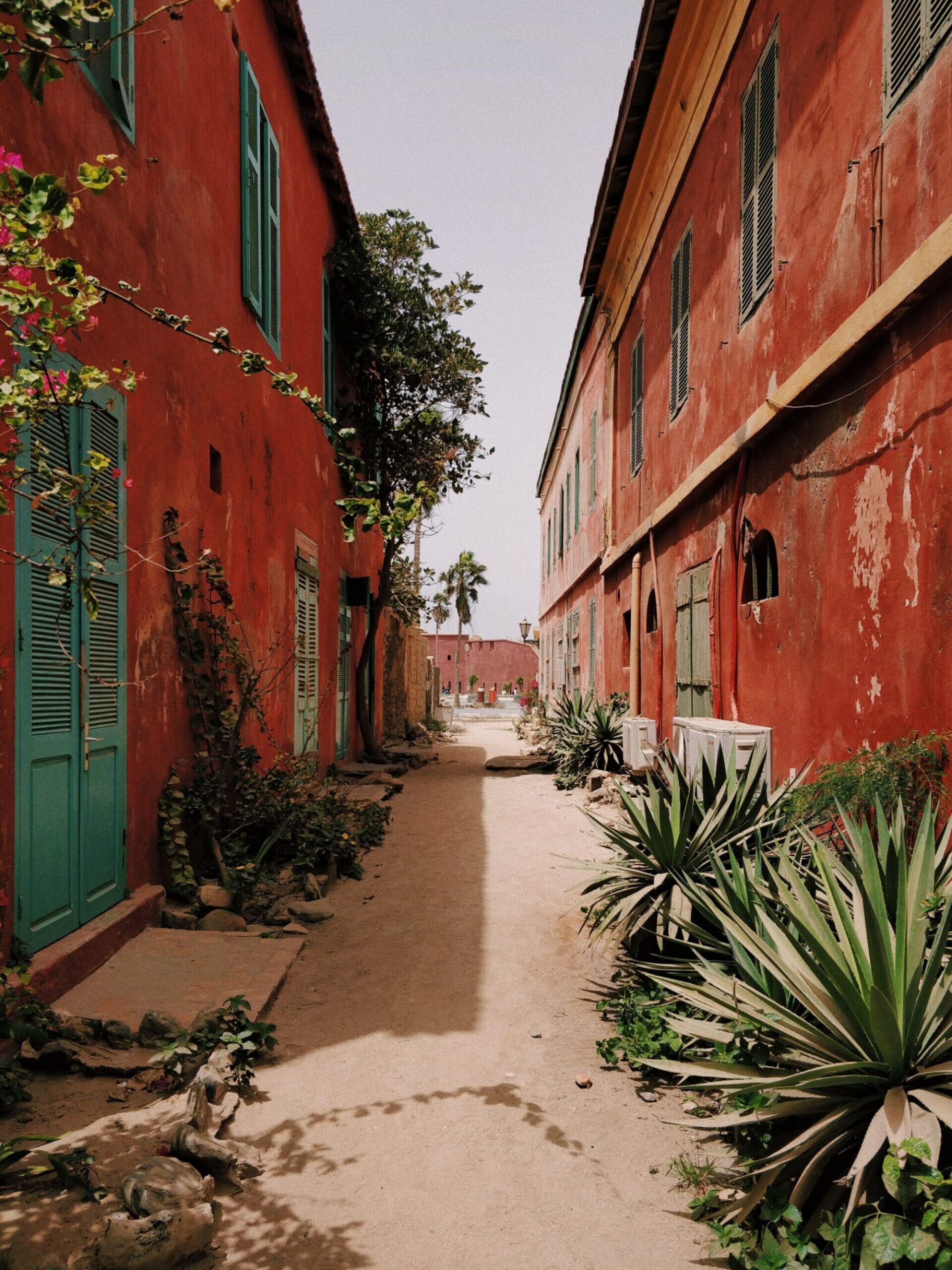
We have now been living in France for over five months, which means we are nearly to the halfway point of our time here. We have really been enjoying Albertville and thought it might be fun to share some of the more bizarre or comical things we’ve come across in French culture and in the French language.

We’ll start with the language:

  1. The French word « avocat » means both attorney and avocado. This was very comical to us when we first arrived here and, only knowing the avocado translation, were seeing signs around town for what appeared to be an office for avocados. 

2. Rollercoasters in French are called “montagnes russes” which literally translates to “Russian mountains”. 

3. They have two different words for twins: one if they are twin boys and one if they are twin girls. The word for twin girls is “jumelles” which is also the word for binoculars. 

4. The French name for a magic wand is a “baguette magique” which as you can you probably tell is literally just a magical baguette. 

5. The French language loves their vowels which leads to words like “jouaient” which has five consecutive vowels. Not to be confused with jouer, jouais, jouait, joué, or jouai which are all different forms of this same verb that all have the same exact pronunciation. I also just came across “créée” this week which is fairly unique with its three consecutive e’s.

6. Counting in French is the absolute weirdest. Things are fairly normal from 1-69 and you are feeling pretty good about yourself. But then you hit 70 and instead of having a new word like seventy in English, they call 70 soixante-dix which is literally « sixty-ten ». This continues with sixty-eleven (71), sixty-twelve (72) until they drop another bomb on you at 80 which is quatre-vingt which is literally « four-twenty ». Ninety? Yeah that’s « quatre-vingt-dix » which is literally « four-twenty-ten ». With these naming conventions they’ve turned simple counting into a mental math exercise.

In terms of French culture, here are a few things we’ve found interesting / funny / surprising. 

  1. Peeing in public is legal here. It’s not uncommon to walk up to the grocery store and there will be a guy peeing in the grass on the edge of the parking lot. 
  2. A cup of coffee isn’t really a thing in French culture. If you order a “café” which is the word for coffee, it will be an espresso. However, they do love their espressos and most restaurants offer them for after your meal. We have had no problem adjusting to this. 
  3. Food is a huge aspect of French culture and they place a lot of value on where it comes from, with a huge emphasis on local production. This means that restaurants and bakeries change their menu frequently to match what ingredients are in season. They also vary their prices based on the specific ingredients. For example, in the grocery store there may be three or four types of hummus of the same brand but each of them will be priced differently. 
  4. Lunch is a big deal here! We get a 2+ hour lunch break as does Mia in the public school system. It’s very common for many small, local stores to close for a couple of hours in the afternoon for a lunch break. 
  5. Most restaurants that are open for lunch will close for several hours before opening again for dinner. The French eat a much later dinner so often restaurants won’t open up again until 6:30 or 7. This makes having dinner out as a family very difficult since our kids usually go to bed at 7 and become pumpkins by 8. 
  6. College in France is nearly free for most students—free as in there is little to no tuition paid out of pocket. Now taxes on the other hand…

It’s been a lot of fun to learn about and experience a new culture, even if we are just here for a year. It has left us all the more excited for this same learning process in Senegal! 

– Adam

“Fresh is Best”: Open Air Markets

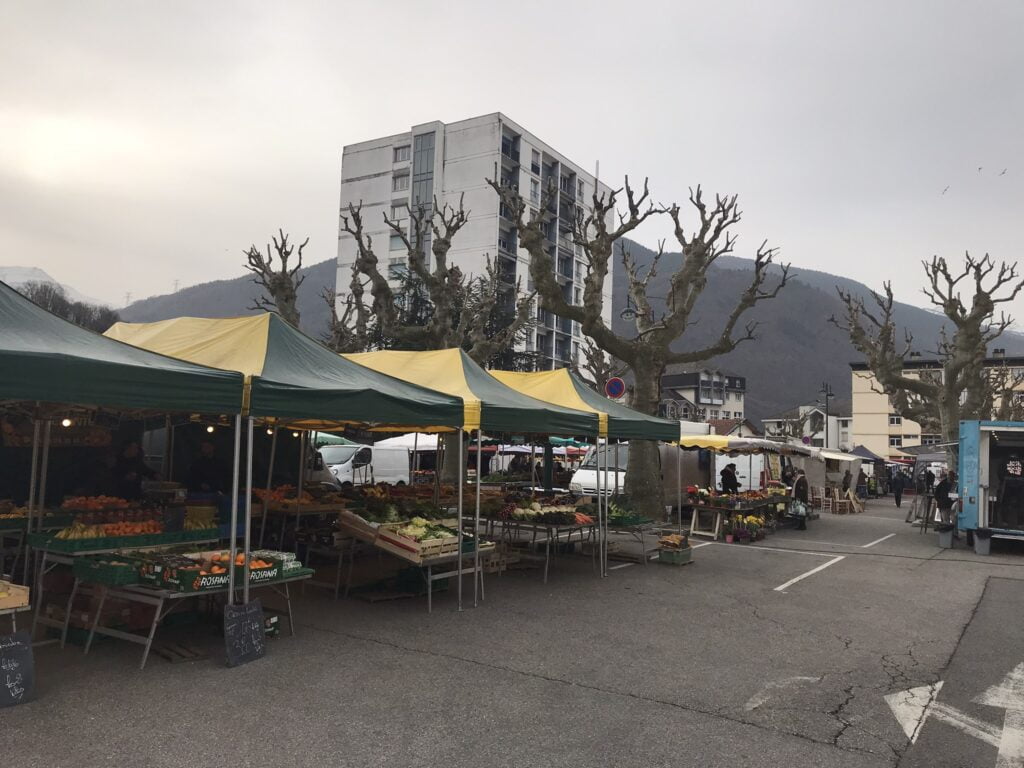
One of the things that is significant in French culture – or at least in the French culture we observe here in Albertville – is that there is a high value on food quality. What I mean is that people here highly value food that is fresh, local and in-season. I think that is why there are three different open air markets a week, all of which are within walking distance of where we live.

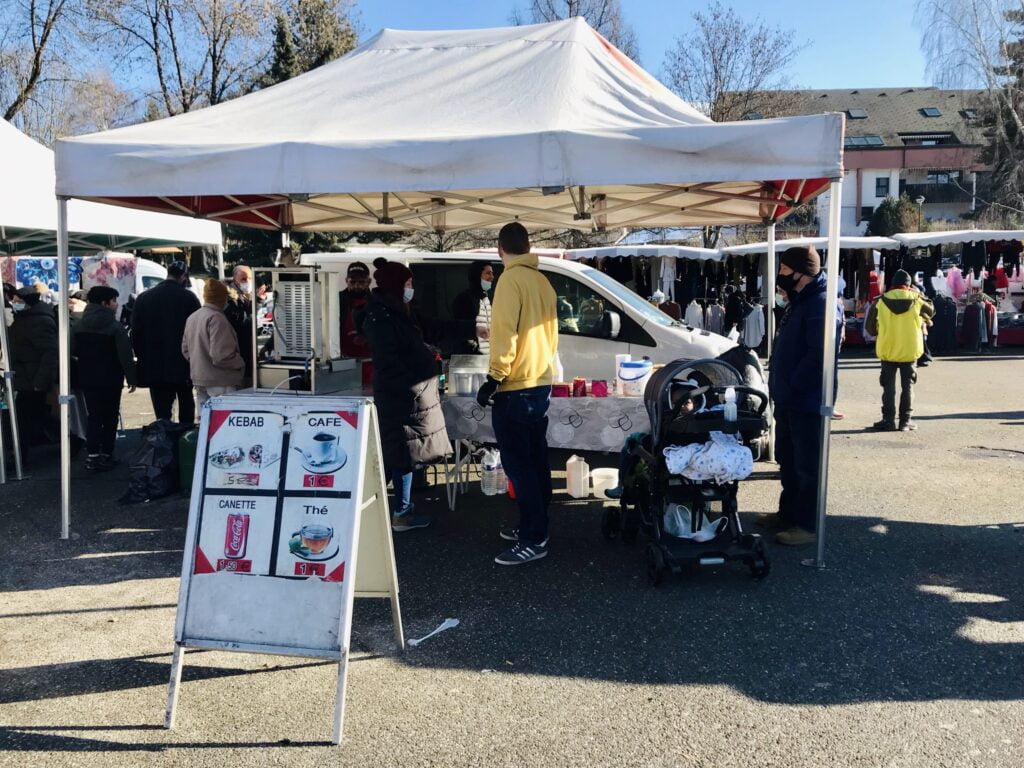
The first is the Wednesday market which has predominantly Arabic vendors and shoppers. This is honestly my favorite market to go to for produce. The people there are so friendly and patient with my weak French and the prices are hard to beat. There is also a really tasty kebab stand there!

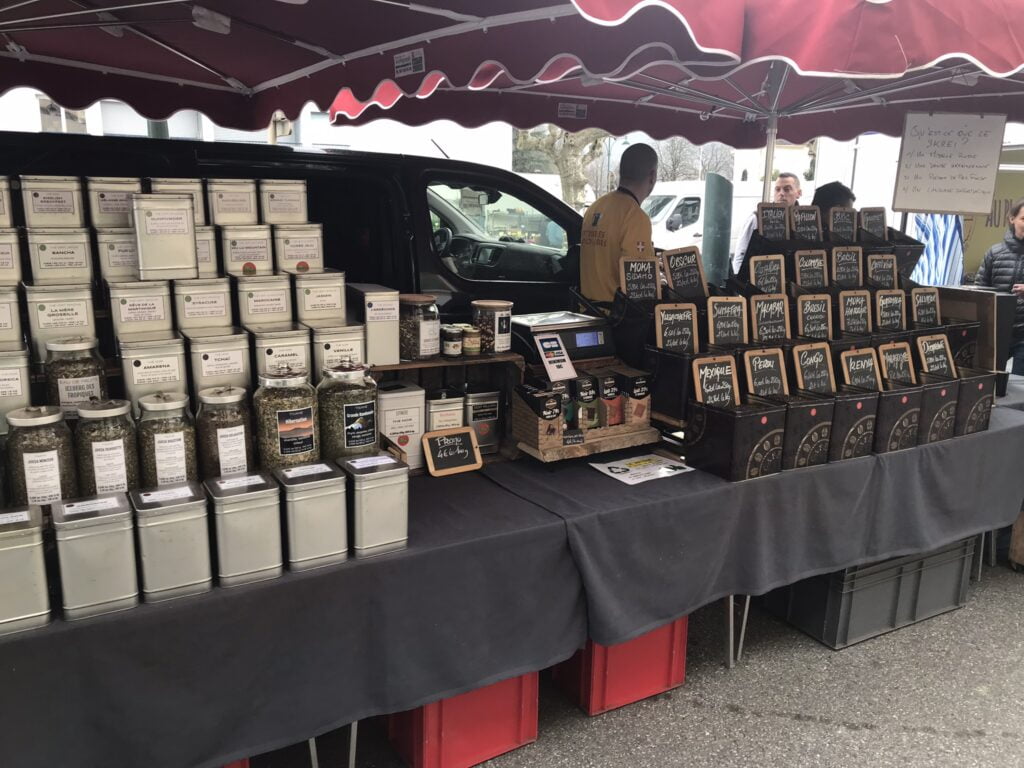
The second is the Thursday market which is the main French market. There are tons of vendors with produce, cheese, bread, meat, baked goods and so on. This is our go to market for whole bean coffee. Admittedly France has not had the best coffee scene compared to what we were used to in the States so we are thankful to have found this vendor (we were a little spoiled coming from living next door to an amazing coffeeshop, in a town with several other incredible coffee shops and a tea lounge!)

The final market is on Saturday morning and, while in a different location, has many of the same vendors as the Thursday market. We don’t visit this one as regularly, but do enjoy stopping by on a Saturday morning family walk when we’re going that direction.

As you can see the options for fresh produce and other food is abundant which is good since there is such a strong desire to support local. In general it seems that the French think most anything that is made or grown in France is best as well. For example, our neighbor who is French has a car and takes several of us women grocery shopping on Mondays. The other day I had grabbed some pears that were from Portugal (all the produce is very clearly labelled based on where it’s from) and she pointed out that there were pears right next to the ones I had grabbed that were far superior because they were grown in France. It was rather humorous to me, but I decided to buy one of each pear anyway to see which was better. And, admittedly, the French pear was significantly better so perhaps there is something to that way of thinking!

In the States I was so accustomed to just buying whatever produce was available and looked good and generally had no idea or concern about which country it had originated in. I have also noticed an emphasis here on buying what’s in-season, both from my friend who takes me grocery shopping and in the lessons we have done in class on food. Again, my choices on what to buy or not buy were more often dictated by price than if something was in-season, especially since most fruits and vegetables are available year round in large grocery stores in the States. This is one area of many in which we have really enjoyed learning about French culture. And we are also really enjoying all the fresh, local foods we get to try!

-Selina

Thursday market fruit and vegetable stands
Thursday market coffee and tea vendor that we frequent
Kebab stand at the Wednesday market

Raclette Party

Last month we got to experience a really unique meal at a birthday party we hosted for our friend and neighbor who is French. The meal is called Raclette and consists of potatoes, hot cheeses and different meats (as you can see pictured in the photo). This is a dish that is native to Switzerland and France.

We had never heard of this before, but we ended up loving it! You prepare your potatoes ahead of time (like little baked potatoes), but do the rest of the cooking at the table. A raclette machine (called a coupelle or raclonette) is placed on the center of the table and has two levels. The top level has a warming plate for the precooked potatoes as well as little grill tops on either side of it for warming up various thinly sliced meats. The lower level is where the heating element for the cheese is, as well as lots of little slots for each person to put their individual pan of cheese. You place your pan of cheese into a slot until it is melted and a little bubbly on the top. You then smash up a potato on your plate, top it with warmed meat and pour the melted cheese overtop everything. We ate it with a side salad and pickles as well as various beverages.

While the food itself was delicious, my favorite part of the experience is how social it was. Instead of spending lots of time having to cook and prepare a meal, each person essentially prepared their own meal at the table. It allowed for an extended amount of time laughing, eating and talking together. This is a great picture of what we are learning are important values when it comes to meals in French culture: Slowing down and being together while enjoying delicious food.

As people who love food, community and hosting, this event was one of our favorite experiences here so far! We look forward to discovering much more about the culture and food here, and sharing it with all of you!

Bon appétit!

Selina

Goûter

A couple of weeks into being here in France, I met the dad (I will call him Henry) of one of Mia’s classmates while waiting to pick her up from school. Thankfully, he spoke a good amount of English so our conversation could last longer than a minute or two :D. Before I knew it, he was inviting our family over to his house that weekend for a “goûter” (pronounced GOO-TAY). I accepted the invite (without knowing what a goûter was) as I was just thrilled to have received an invitation to a French family’s home.

As I would come to learn, goûter is an afternoon snack meant for children, usually around 4 of 4:30pm. Two important things to note. First, French families don’t usually eat dinner until 7 or 8pm so the goûter tides the kids over since they usually eat lunch around noon. Second, this is typically the only snack French children get during the day, so it is very precious to them. This was very shocking to us, as our kids pretty much snack continuously throughout the day.

After having to cancel two weeks in a row due to sick kids, we were finally able to head to this family’s house for goûter last weekend, although it was only Mia and I that went since Desmond had another fever. This was a really neat experience as it was our first time inside a French home and it was Mia’s first play date with someone from school. They served crepes with Nutella, coconut flakes, honey or jam as toppings. Much to my delight, I was also invited to eat. We ended up spending about three and half hours there and it was a really fun time to get to know Henry and his family better. It was also excellent French practice for me as Henry’s wife doesn’t speak any English.

We plan to have this family over to our house for a meal sometime soon and to visit a local pool with them during our two week break from school (2/12 – 2/27). Watch out for another post about our French pool experience!

-Adam