Trading Novelty for Familiarity

We have been back in Senegal for three months now (how??). I wanted to try and describe what it’s been like to be back.

Imagine that you have just bought a new pair of shoes. They’re stiff and not broken in and you notice everything like where they pinch and if the heel is rubbing. You wonder if these will work out, is the heel rubbing too much? Should you have sized up? Sized down? On the flip side, you are also very aware of how new and lovely they are. They look good with this outfit, they work well for this event and they are so clean.

After some time you don’t notice the stiffness as much, if at all, because you’ve worn the shoes in. As such they are more comfortable. However, they are also more worn in another sense. They are likely not as clean as they were when you first bought them, perhaps they even have scuff marks or stains. You’ve had them a while now so they’re not as exciting as when you first bought them but you most likely like them even better now than at the start because they fit more comfortably to your foot.

That’s what it’s been like coming back to Senegal. When we first moved here Senegal was stiff. We didn’t know anything and had spent all of one week in Dakar before living here. Was this a good choice? Are we a good fit for life here?

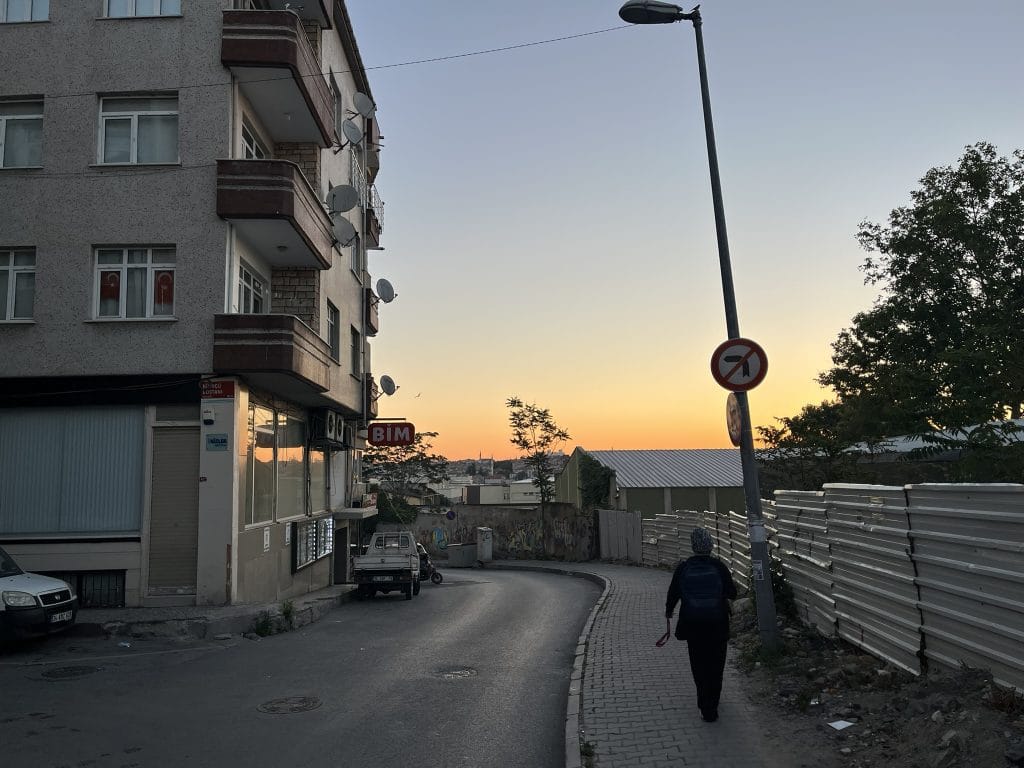
There were also things at the beginning that struck us and delighted us, sometimes simply because they were new. For example, that horse drawn carts often stop in front of our home or people passing by shout what it is they are selling. The piles of fruit and vegetables at various produce stands or ladies roasting peanuts in the sand on the side of the road. Day to day we just don’t really notice these things as much as we used to and if we do we’re not quite as amazed by them.

In fact, in some ways I am tempted to more so notice the “scuffs”- the dust, the heat, people smoking cigarettes on our front porch, the trash in the streets, the disrepair of things, traffic, cultural differences. However, while I see these things more, I’m also not as shocked by them or by the various, previously foreign situations I find myself in. I can move and live here more comfortably, with greater ease and confidence.

We’ve traded novelty for familiarity but honestly I would make that trade most days. The key is to pause and remember the things we do love and the things that did once amaze. Appreciate those things but with the added privilege of experience. Choose to sit in childlike awe and naivete again, but with the gift of moving out of the role of novice.

I am so grateful to be back here and for the growing familiarity of and love for Senegal. What a gift to get to call this place home!

– Selina

The Saga of the Broken Fridge

The Reason for the Season (of Fridge Repair)

For those who have been following along with us, you know that we’ve been on a bit of a journey since our return to Senegal with trying to get our fridge fixed. Upon getting back, we found our fridge was only cooling to between 50 and 60 degrees usually, and sometimes it would cut out completely and increase all the way up to room temperature. Over the last two months we have been trying to get it fixed, and we wanted to share some things about what this process has been like here in Dakar. Some of these things we already knew, and some we learned during this experience.

  1. Finding the right help can be very difficult. Very few tradesmen (essentially none) will have any kind of online presence. Word of mouth and recommendations are key here, especially as the quality of work can vary greatly amongst tradesmen. Whenever possible you want to avoid hiring someone you have no recommendation for. This is true across all trades: carpenters, masons, plumbers, electricians, mechanics, A/C repairmen, etc. We have needed to hire each of these (except for a carpenter), at least once, but some on several occasions, during our few years here. So, we first turned to the local missionary community to get a recommendation. Unfortunately, this only turned up two names. One we were told was an “A/C guy” and the other an electrician, but with the caveat that perhaps they work on fridges too. After neither of these first two guys worked out, we turned to a Facebook group for expats and asked for a recommendation there which is where we found our third repairman.
  2. A worker will probably not tell you when they don’t know what is wrong. We’ve been told this is a product of the honor / shame culture. We first experienced this when Evie was really sick and in the hospital when she was two weeks old. We were told by another missionary, who is the head of her organization’s medical team here in Dakar, that the hospital would not tell us when they had reached their capacity to treat her, and it was up to us to push for a medical evacuation if that was needed. We think that is what we were experiencing with the first repairman we worked with as well. Over the course of about a month (more on this next), he tried four different fixes, none of which fixed the fridge. We don’t think he really had much of an idea what our fridge’s specific problem was, but rather was just going about replacing parts that could be the problem. At the end of it all, he just stopped responding to us.
  3. Communication is often difficult and plans are held loosely. With our first repairman, he would often not get back to us for days. At one point we didn’t hear from him for about 10 days and we thought he was moving on from the repair without wanting to say that. Then one day he messaged and told me he was in the village and without data which is why we didn’t hear from him. Also, almost all plans are made with the phrase “Inshallah” at the end, which means “If Allah wills it” in Arabic. Over the course of the last two months of trying to get our fridge fixed, I would estimate that we have had at least 10 days when a repair guy said he would come by and then just didn’t show up, without calling us and without giving any explanation the next time about why they didn’t come. This can be maddening to our American sensibilities.

Last weekend our latest fridge guy stopped over and did a freon recharge. This seems to have done the trick…kind of. The fridge is now cooling to between 35 and 40 degrees consistently, which we are very excited about. However, the side of the fridge where the condenser is located is now super hot, like can’t-leave-your-hand-on-it-for-more-than-a-couple-seconds-or-it-will-burn-you hot. So we are not confident that all is working as it should. Only time will tell!

A New English Center

Our primary ministry in Dakar is at the English center where I teach. The center is located in the neighborhood of Point E which is in the heart of Dakar, situated close to downtown, the Corniche (a main avenue that runs along the coast) and many universities including Dakar’s largest university, Université Cheikh Anta Diop (UCAD). This neighborhood is ideal for us since many of our students attend one of the universities nearby and travelling across Dakar is often very difficult and time consuming due to traffic and road conditions.

Our current English center is a converted three-bedroom apartment. Two of those bedrooms are used as classrooms and the third is an office. We also use the salon (living room) as a classroom for larger level classes and drop-in classes. We have been located in this space for the last 15 years, however, we have badly outgrown it.

This academic year we have over 230 registered members and nearly 130 students are signed up for classes in our current trimester. Many members who are not signed up for a class this trimester still come each week to attend a drop-in class or simply to hang out or study. At several points during the week we have all three classrooms being used, which means students who are there to hang out or study are forced to sit in the hallway or kitchen. During these busy times it is not abnormal for us to have more than 50 students in our center. We praise God for this! At the same time, 50 people is a lot for a roughly 1,000 square foot apartment! We also turn away students at every registration period because our classes, which are limited by our classroom sizes, are full.

Learning English has proven to be a very effective tool to draw people in and build relationships with them. We use the Bible in every class, exposing our students to God’s Word from day 1 with the purpose of identifying “seekers” who are open to further Bible study outside of class, either in a group setting or one-on-one. From there our prayer is that God would speak through His Word, bringing these “seekers” to believe in and trust Christ for their salvation. We currently have seven weekly Bible studies (four group studies and three one-on-one studies) where our students are reading and studying God’s word. Please pray for eyes to see and ears to hear for these students; that the gospel would be seen and understood not as folly, but as the good news it is!

We want to be able to welcome more students because we know that every student that walks through our doors is going to be engaged with the Word of God and experience the love of God through our teachers. We also want to be able to offer more comfortable spaces (no more having 10 students crammed into a hallway!) where our students can come, hang out, study and experience God’s love. With these desires in mind we are writing this post to share with you a financial need we have.

During the last 15 years in this location, our rent has not been increased once. Once again, we praise God for this! As we have been looking for a new, larger facility over the last year, it has become apparent that we will likely need to be able to afford a rent that is 300-400% more than what we are currently paying. Please take five minutes to watch the video below to see and hear from our students and staff about this need.

If you would like to support this ministry through recurring support or a one-time gift, you can do that here https://avantministries.org/missionary/adam-and-selina-matzke

Until all have heard,

Adam

Choosing to Embrace Risk

Sometimes when I talk to friends who are missionaries on the field I’m struck by the crazy situations we encounter in a cross cultural setting. These crazy stories can often be ones filled with disbelief and laughter; just the other night we were joking with friends serving in another West African country that their 10 passenger car could actually be considered a 20 passenger car since piling as many people into a vehicle as possible is a pretty common sight to see in West Africa.

At other times though there are stories filled with disbelief and sadness, anger, frustration, fear and trauma of various kinds. Whether it’s from robberies, health scares, tense political situations or miscommunications in a second (or third!) language, it is easy to come across situations in a foreign country that push you towards complete physical or emotional exhaustion. It comes with the territory.

For example, a friend and I were commiserating recently about the fears we often have to surrender to the Lord living in a place with limited health care. In reality we have some of, if not the best, health care access in West Africa. That being said, it is still limited, especially in relation to emergency responses or intensive care for a more serious illness. In my case, I reflected on all that we experienced with Evie right after she was born. When she came down with a fever and was septic as a two week old we hit the cap of what could be done here medically. By God’s grace this was enough and she made a full recovery without needing to be medically evacuated elsewhere. My friend has been walking through terrifying breathing issues with her youngest son for about a year now and they have nearly exhausted all the resources here to determine why this is happening. When the moments of crisis with his breathing hit they have to hope the emergency response teams are able to come quickly (traffic in Dakar doesn’t always allow this) and aren’t occupied elsewhere.

For other friends serving in Africa there have been plane or car accidents, having their homes broken into, various other illnesses or injuries, getting mugged on the street or navigating countries being ravaged by military coups. In fact, in between drafts of this very post I heard about several friends having to evacuate their country of service due to political unrest and of another friend who was serving in Africa and had to fly to a different country emergently to get a much needed surgery which uncovered a cancer diagnosis.
In other parts of the world (and in parts of Africa too) I know these stressful experiences can involve being watched by the government, persecuted for sharing the gospel, getting evicted from homes with little notice or even getting kicked out of the country.

These things can feel overwhelming. Why choose to serve in places like this where there is so much risk, where the reality of walking through some sort of trauma feels more like a “when” than an “if”?

This reality is obviously not limited to overseas missions. Those choosing to enter the military are choosing a life with great risk. Those choosing to go into the medical field will very likely experience things that are very stressful or traumatizing. Even the simple choice to love another person is fraught with risk, knowing that our lives are fragile and we may lose our loved ones to illness or tragedy.

The list goes on and on for things that we choose to be a part of (or don’t choose, but endure anyway) in this fallen world that we know will be wrought with darkness and sin. And if it’s not from external situations then it’s from the internal battles we face with our own sin. The reality of life in this world is hard.

As a follower of Christ, however, we can choose to do things or go places that carry risk without grim determination, but rather with exuberant hope. Yes, we will face trials in this life – whether at home or abroad, but we don’t face them without this great hope. The One in us has already overcome. He has already won. The end has already been determined and we are on the victorious side. The darkness will be banished forever, the King reigning on His throne. No more tears, no more sadness, no more anxiety, no more trauma, no more battling my flesh.

We have this hope to share with our friends, family and neighbors who will inevitably walk through their own trials, but don’t have to do so without hope. We have the answer. We hold the key. His Name is Jesus and He changes everything. Our paths may lead to dark parts of the world, to hard situations and to places we never wanted to walk. We may even actively choose to embrace some of these risks, dangers and discomforts for the sake of following where God leads, for His glory and for the opportunity to share the good news with others. 

In all these things we cling to hope and to a God who is good and will preserve us, maybe not in these mortal bodies, but certainly in our faith.

2 Timothy 2:3;8-10

“Join with me in suffering, like a good solider of Christ Jesus…Remember Jesus Christ, raised from the dead, descended from David. This is my gospel, for which I am suffering even to the point of being chained like a criminal. But God’s word is not chained. Therefore I endure everything for the sake of the elect, that they too may obtain the salvation that is in Christ Jesus, with eternal glory.”

– Selina
Digital Fast

Selina and I have been talking for a while about the role of technology in our lives and in our family habits. Whereas the world as a whole (this seems to be one thing the majority of cultures and nations can agree on!) is embracing technology in more and more settings, we have felt a growing discomfort with this. We have tried to be intentional with our family’s use of technology and in particular have tried to put significant limitations on the amount of time our kids have in front of a screen, especially at such young ages. Before leaving the States, we even bought a “phone jail”, much to the chagrin of our extended family, to be used at family gatherings. Despite these efforts, we have felt like screens, in particular our smartphones, have still grown to occupy a position in our lives that we don’t think is warranted or desired. So in January we decided to start a digital fast.
I first heard of this particular version of a digital fast while walking home from the English center and listening to a podcast. Perhaps if Alanis Morissette ever does a sequel to her song “Ironic” she can use this as an example 😀 The basic tenants of the fast come from a book written by Darren Whitehead titled, The Digital Fast. Here are the steps we’ve taken to limit the amount of time we spend in front of screens:

  1. The first step is to take your smartphone and turn it into a “dumbphone”. This means that we went through all of ours apps to determine if each app is something useful that helps us be more productive or something that distracts us from being productive. Anything determined to be a distraction was deleted. Examples for us included Youtube, all social media apps, ESPN, LinkedIn, Facebook messenger (for me), and streaming services apps.
  2. The next step was to look through our remaining apps and identify any that while useful, help us to do something that we could do on our laptop instead. We admit that we modified this slightly from what Dr. Whitehood suggested which includes deleting your web browser. I also still have some banking and credit card apps on my phone that I wanted to be able to access while on the go. But the big one (at least for me) was deleting email off of my phone.
  3. After dumbing down our phones, we also made some further restrictions on our smart phones such as:
    • As much as possible, place our phones on a shelf in our living room rather than being kept on or near us, thus creating a temptation and a desire to check them.
    • For me I moved my phone charger away from my bedside table and instead placed it across the room on our dresser. The goal is to “put my phone to bed” prior to putting myself to bed and encourage more reading (of a physical book!) before going to sleep.
    • Limiting the times we might listen to a podcast or audiobook in order to create more quiet time and natural space to reflect or pray.
  4. We also committed to no TV or movies, including family movie night. The kids were surprisingly on board with this! Instead on Friday nights we are trying to do a special family activity together like playing a game, reading books or being outside together.
  5. While using our laptop, no “entertainment” sites are allowed. Again this includes things like Youtube, Yahoo News (this is mostly junk news so I’ve turned to Aljazeera for staying up-to-date during this fast) and of course social media.

We put a few other limitations in place as well but this is the bulk of them. We’ve committed to this fast for 40 days, ending 3/14/25. Some of these things we know we are limiting just for the 40 days (e.g. family movie night) while others, especially pertaining to our phones, we hope will lead to permanent changes in our habits and technology usage.

We are writing this post both for accountability (please ask us how it is going!) and in case any of you are interested in doing something similar. Selina plans to write another post at the end of the fast to share some of the things we learned from it.
To finish, I want to share a few resources we’ve used that have helped us think more about technology in our lives:

  1. Habits of the Household by Justin Whitmel Earley
  2. The Common Rule: Habits of Purpose for an Age of Distraction by Justin Whitmel Earley
  3. The Techwise Family: Everyday Steps for Putting Technology in Its Proper Place by Andy Crouch
  4. The Battle for Your Time: Exposing the Costs of Social Media – This is a TEDx talk by Dino Ambrosi that I used as the basis for a conversation class at the English Center. He shares some very interesting and sobering statistics!

– Adam

Made Alive

Over the last couple of months Selina and I have been studying the book of Ephesians with two other couples. When studying Ephesians 2, I was struck anew by the language we see in verses 1-5. These verses are as follows:
1 And you were dead in your trespasses and sins in which you previously walked according to the ways of this world, according to the ruler of the power of the air, the spirit now working in the disobedient. We too all previously lived among them in our fleshly desires, carrying out the inclinations of our flesh and thoughts, and we were by nature children under wrath as the others were also. But God, who is rich in mercy, because of his great love that he had for us, made us alive with Christ even though we were dead in trespasses. You are saved by grace!” (emphasis mine)

As human beings created in God’s image, we are capable of absolutely incredible things. Mankind has created means of transportation in cars, trains and planes that make trips that used to take months (or years!), able to be completed in just hours. We have created phones and computers that allow us to talk (even with video) with anyone, anywhere in the world with essentially no delay. We have created programs that allow real-time translation so even language barriers can be overcome. We have built spacesuits and rockets that have allowed humans to travel outside of our atmosphere and even land on the moon, and then safely return again to Earth. We have created medical equipment that allows surgeons to remove someone’s defective heart and replace it with a working one. Amazing!
As human beings we have accomplished some truly incredible things. We invent, create, build and construct. We fine-tune, adjust, renovate and improve. We fix, repair, resolve, remedy and restore. We can even mend, cure and heal with the right equipment and medicines. However, despite all of these things that we can do and have done, there is still something we can’t do. We can’t make that which is dead alive. No human has ever made life. That which is dead, remains dead despite our greatest ideas, achievements and creations. To “make alive” is the work of God.

You may have heard it said that humans have a sin problem. We do, but to say it like this doesn’t necessarily communicate the severity of the situation. We don’t have a sin problem like we may have a mouse problem in our basement. A quick call to the exterminator or a few mouse traps and our problem is resolved. There are solutions at our disposal to solve that kind of problem. Ephesians 2:1-5 tells us, rather, that our sins have made us spiritually dead. Not sick from sin. Not injured from sin. Not beset by sin. We are dead because of our sins. And the thing about being dead is that once you are dead, there is nothing you can do. It’s just like with our physical lives. While we are sick or injured we have means to try and get better. Once we are dead, there is nothing we can do. It’s over. There is no hope left.

And that is our spiritual reality apart from Christ. We are dead in our sins. There is no amount of good deeds, asking for forgiveness, making amends, praying, tithing or anything else we do that we think brings us favor with God, that can make even one iota of difference in our standing before God. We are already dead. We are dead and without hope in and of ourselves.

Thankfully, we have a God who has the power to make alive that which was was once dead. And that is exactly what He has done in Christ. Even though we were dead, we have been made alive in Christ. And verse four tells us that God makes us alive not because we have earned it, but because of who He is. The God of the universe who created the heavens and the earth is rich in mercy and He loves us. He loves you. He loves me. He loves the people of Senegal. It’s God’s love that motivated Him to send His Son to die and receive the judgement for our sin, and then to raise him back to life, conquering death. And it is only because of this act that we can go from spiritually dead to spiritually alive. By ourselves we are dead and without hope, but in Christ we are made alive and the hope of our salvation is secured. Praise be to God forever and ever!

– Adam

Africa Eco Race

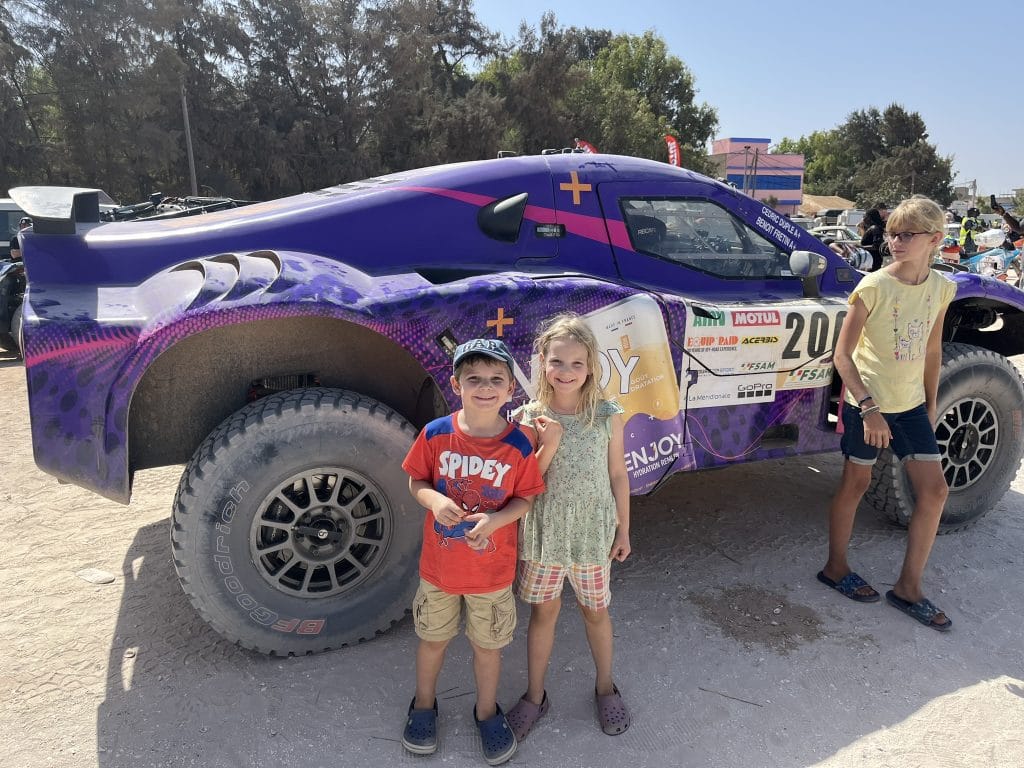
A couple of weeks ago I had the opportunity to take Mia and Desmond to watch the final stage of the Africa Eco Race which finishes at Lac Rose, about an hour outside of Dakar. If you have never heard of this race, you are in good company. We knew nothing about it before moving here.

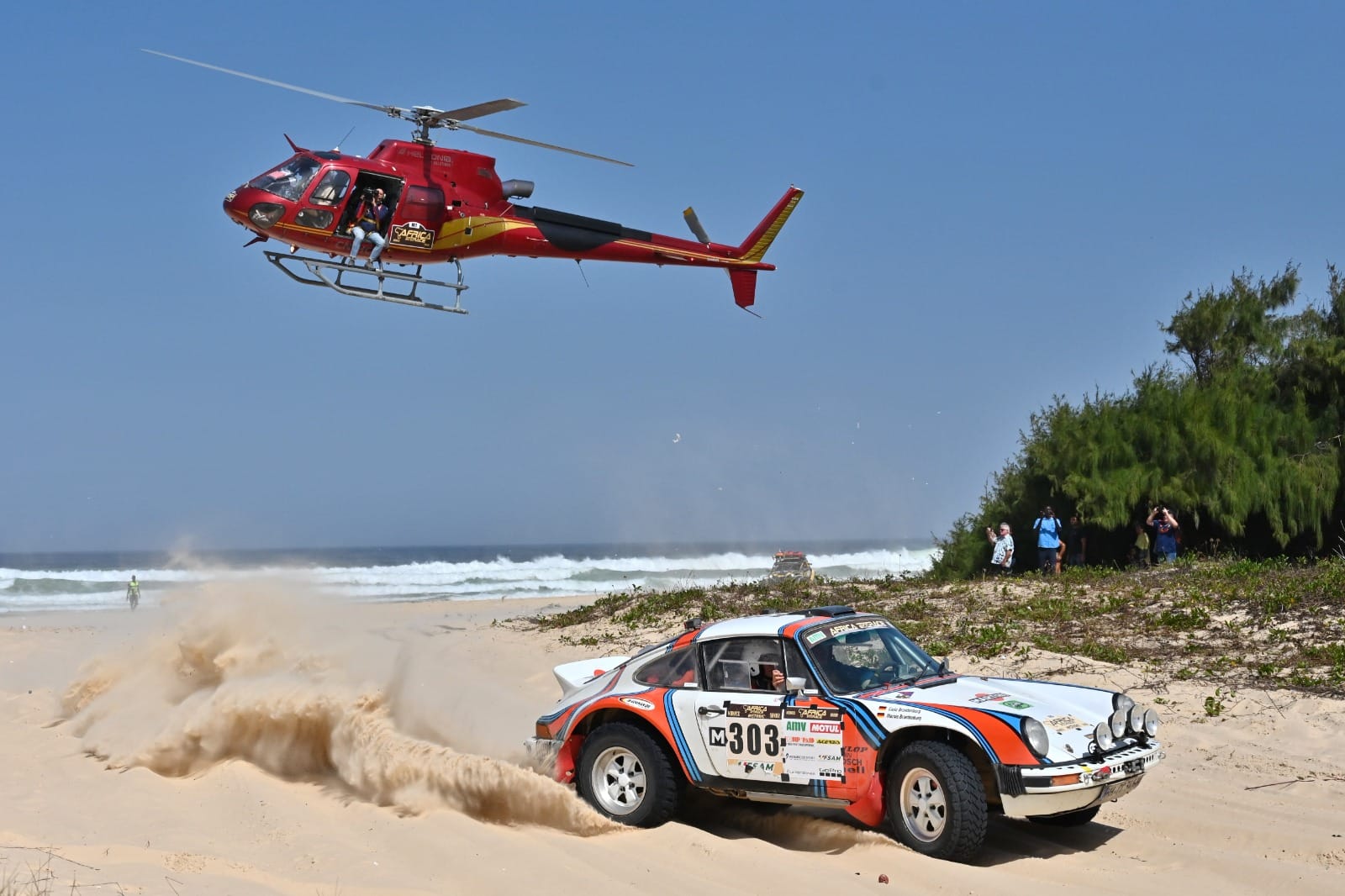
This year there were 156 racers in 121 vehicles (motorcycles, quads, cars, SSVs and trucks) that departed from Monaco on December 28, 2024 with the goal of navigating the 12-stage course through the deserts and dunes of Morocco, Mauritania and Senegal, arriving at Lac Rose on January 12, 2025 (picture below).

We knew some other missionary families that attend this event each year so I thought it would be fun to bring the two big kids to it since they really like a show called Blaze about a monster truck who often does races. I honestly wasn’t sure what to expect, but it ended up being a very neat experience!

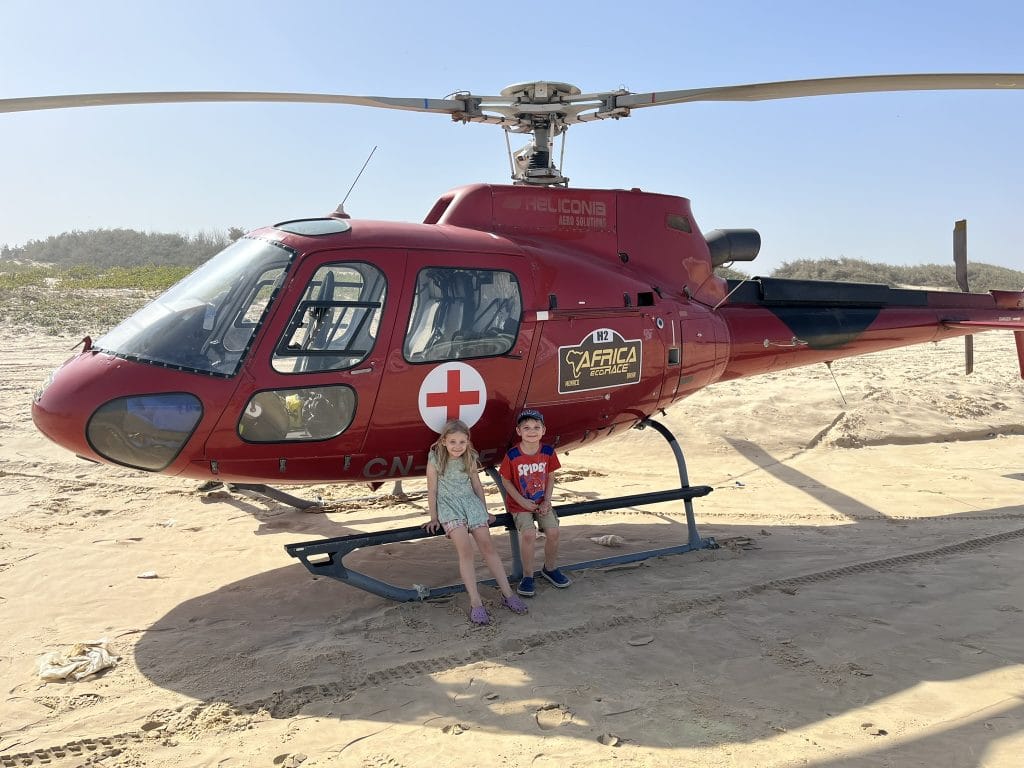
The final stage of the race has the drivers driving down the coast right on the ocean. We were sitting right at the corner where they come off the beach and turn inland toward Lac Rose. As each vehicle type comes through the leaders are followed by a helicopter which is filming from above. This ended up being the highlight of the day! One time, the helicopter came in super low and even dragged its tail through the sand, which could have ended very poorly if the pilot hadn’t recovered so well. There is a picture and video of this below!

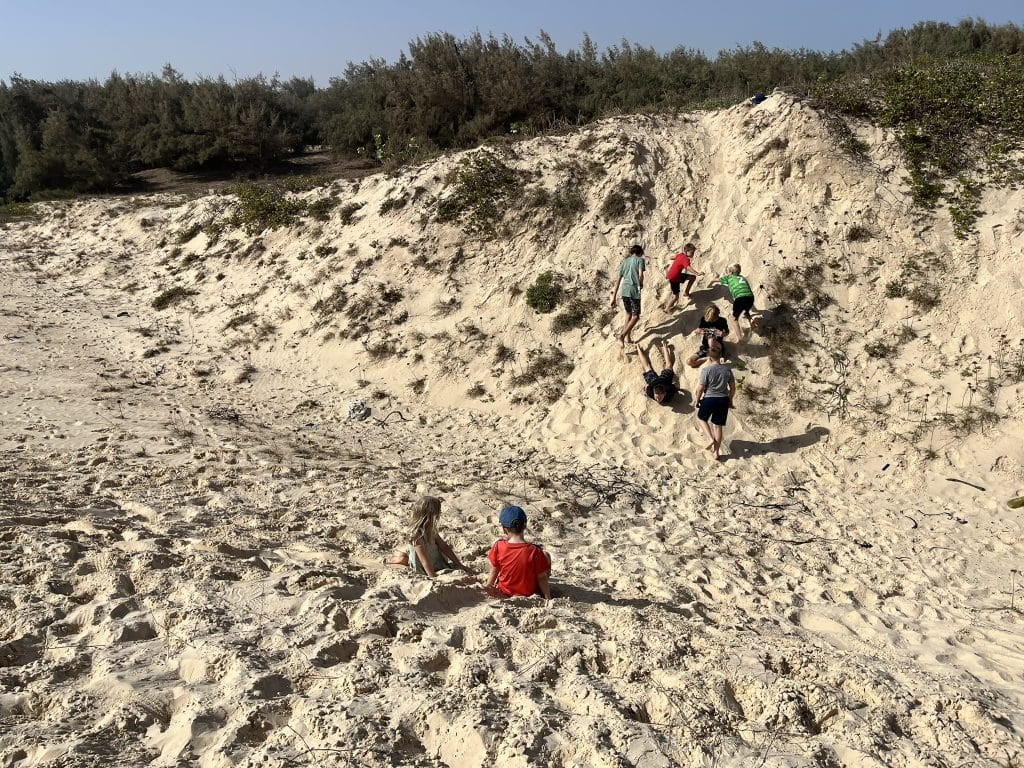
The other highlight of the trip for the kids was simply playing in the dunes. While I enjoyed watching all the vehicles come through, Mia and Desmond spent half their time just playing in the sand. Over the last week and half the kids have not stopped talking about the outing, and I have not stopped finding new piles of sand in our car 😀 We definitely hope to attend the race again in the future!

– Adam

The tail scrape!
Picture of the tail scrape!

The Bible in my language…I’ve never heard of that!

I have been meeting with Pape (not his real name) for over a year now to study the Bible in English. While Pape has a very good level in English, his mother tongue or first language is Soninke. The Soninke people group are primarily located in Mali but are represented across West Africa, including some 400,000 people here in Senegal according to Joshua Project.

For Christmas I wanted to get Pape some Scripture in Soninke. I started asking around for where I might be able to find this and was connected with another missionary, who I will call Bill, who has been working amongst the Soninke people for the last 30 years. While Bill lives in another city in Senegal, he was currently in Dakar along with some of his Soninke colleagues in order to do a final reading and revision of the Soninke New Testament translation.

So Bill invited me to come over and meet him and some of his colleagues and I asked to bring Pape along. As we were driving over, I told Pape about the translation work being done. He told me that he had never seen or heard of a Bible in Soninke and was very interested to see what this meeting would be like.

Bill and his team warmly welcomed us and told us about the work they were doing. We spent about 75 minutes together talking and looking through the printed Scripture resources they had. Pape was able to meet Bill as well as three Soninke men working on the translation, one of whom is a follower of Jesus. As far as I know, this is the first Soninke believer that Pape has ever met! Pape chose several of the Soninke resources, including the Gospel of Matthew to take home. They also shared with him several online resources in Soninke, including the Jesus Film.

It was a truly incredible experience! The whole time we were there you could see the joy on Pape’s face as he interacted with other Soninke men and looked through several Bible texts written in his own language. After we left, he just kept telling me. “A Bible in Soninke, I’ve never heard of that!” and told me he is going to show it to some of his family and friends. Bill also invited Pape to come back over the following two weeks to join them as they read the whole New Testament out loud in Soninke and make their final verifications.

Growing up as an English speaker, I have never had an experience like this before. The Bible is, and always has been, so easily accessible to me. To see the joy it brought Pape to read God’s Word in his own language for the first time is not something I will ever forget. Please join me in praying for the following things:

  1. That as Pape reads God’s Word and watches the Jesus Film in his own language, that God would reveal Himself to Pape in a way that He has never experienced.
  2. That Pape would share these Scripture resources with his family and friends and that other Soninke people could experience God’s Word in their own language for the first time.
  3. For an ongoing relationship between Pape and the Soninke believer. This believer lives in Mali, but they did exchange phone numbers. Please pray for a friendship to form and for Pape to see that following Jesus is not just for Toubabs (the Wolof word used here in Dakar for white people).
  4. That Pape might go back and spend more time with the translation team, listening to the reading of God’s Word.
  5. Ultimately, that God’s Spirit would work through His Word, drawing Pape into a relationship with Himself.
  6. Please pray also for the two Soninke men who are not yet followers of Jesus but are working on the Bible translation. Pray that their eyes would be opened to who Jesus is and that they would choose to follow Him.

– Adam

More Driving (and Ticket) Fun!

Driving here in Dakar continues to be a deep well of opportunity for cultural experiences. A few weeks ago I was heading home from some errands with the kids when I was once again pulled over by a traffic cop. It is hard to explain this here, but I was pulled over for crossing between two paved roads through this little packed down path of sand about 5 meters long. This path is well worn down because (and I don’t think I am exaggerating here) thousands of cars drive over it every day. There is no sign saying it is illegal to make this cross over. It is not paved, but most roads here aren’t so that doesn’t mean much. And you can see the worn in path because so many people drive it. If you are familiar with the term “desire path”, “social trail” or “cow trail” this is much like that, only with vehicle traffic rather than foot traffic.

Anyways, on this particular day there was a cop sitting right next to this path and he pulled me over and was insistent that what I did was illegal. As I sat there I counted more than 25 cars drive past me on the same path, but that didn’t deter him. So he wrote me a ticket and took my license which meant I would need to go downtown the following day to get it back. I will admit that it was one of those days when I was just feeling frustrated with some of the everyday struggles of living in Dakar, particularly with driving. So after this happened I confess I was far from being in a cheerful mood or having an attitude of gratefulness.

Anyway, the next day I went downtown after work to the police station to get my license back. This is the third time I have done this and each visit has been a totally unique experience. This time when I walked in, the place was practically empty. Usually there are about 40 guys sitting in the lot also trying to get their licenses back, but this time I saw only one other guy there. So I walked up to a police officer and asked him where I needed to go. He pointed me in the direction of an office, but before I could go another officer came up and asked me for my ticket. This is a rough recollection of how our conversation went from there:

Cop: Ahh, the athlete!
Me (while laughing totally confused): Huh, who is saying that?
Cop: I am!
Me: (still laughing uncomfortably while having no idea what he is talking about) Ah ok. I do try and stay in shape.
Cop: Yeah I see you running every morning.
Me: What? Really?
Cop: Yeah in Hann Maristes (the neighborhood where we live)!

From there he went on to tell me how he also lives in Hann Maristes and regularly sees me out running in the morning near his house and near where he takes his taxi every morning to come to work. In a city of more than three million people these types of encounters are very rare as you’d imagine so I was totally shocked. We ended up chatting for a few minutes and exchanged names and I told him to yell at me next time he sees me out running!

He then went into an office (a different one than where my license had been the previous two times so I still have no idea what their system is) and brought me back my license and told me I didn’t need to pay anything. All in all I was at the police station for probably less than 10 minutes which absolutely smashes my previous record at this station!

This experience felt like such a pointed gift from God after the mood I had been in the day before. I left the police station thankful for having the opportunity to be there that day and make this new connection. It’s a good reminder to me that God is at work in all the small details of our lives and that when I hold too tightly to my expectations/desires/timetable, I risk missing what God has for me in that moment, whether that be something to learn, an opportunity to grow or a new relationship to form. I am thankful I serve a God who doesn’t rely on me getting it right in order for Him to accomplish His plans. And I am sure I will have another opportunity like this (i.e. get another ticket) in the not too distant future 😀

– Adam

Grace Upon Grace

I had a very wise mentor remind me a couple months ago that God gives us “grace upon grace”. She was expressing this as something the Lord had been reminding her of at the time, but also as an encouragement to me. At the time of this conversation I was entering the first trimester with baby no. 4 while also tackling being a first time homeschooling mom living overseas. As a seasoned homeschool mom herself she was speaking from experience that there is certainly a learning curve to the homeschool life just as there is with anything. Given our life circumstances she was offering it as an extra encouragement to rest in God’s grace, especially when things didn’t go exactly as I planned or hoped with homeschool. A big part of this seems to be weighing out my expectations for myself as a teacher, for my kids as students, as well as what we can reasonably accomplish each day with a 1st grader, preschooler and a 1 year old.

“Expectation” is a theme that just keeps popping up as I can find myself trying to “measure up” to expectations in other areas as well such as who I should be as a missionary. Whether it’s from assuming our supporters have certain expectations of me or comparing myself to the other missionaries whose newsletters show up in my inbox it can be a vicious game and one that does not take into account God’s grace or sufficiency in my life. In each area of life I am guilty of playing this game – mother, wife, teacher, homemaker, language learner etc. etc. etc.

Suffice it to say that I need to be regularly (like daily? or hourly? or minutely?) resting in the Lord, who He is and who I am in light of who He says I am. I am a chosen, adopted child of God whose sins have been forgiven. I’ve been given new life and a new identity. My worth is not measured by how well I’m meeting expectations or by what I can contribute (a truth I often forget –> I’ve contributed nothing, Jesus contributed everything). In this God has been reminding me to abide in Him, to rest in Him, to find peace in Him. And in this I’m also being reminded that I can’t do everything, but I can be faithful in the areas God has called me to for each season of life.

So what does this season of life look like? It’s a season of finishing well and preparing for change. As I type this we are coming to the end of our first term here in Senegal. We have been away from the States for 3 years. We have made two international moves, had a baby in Africa, started homeschooling, learned (*are learning) a new language (we’ve discovered this is a process), made so many connections with Senegalese people as well as our expat community here, discovered how long and slow cultural acquisition is, grown lots in our marriage and parenting, learned more about who God is by seeing Him through the lens of other cultures and also seen our faith get deepened tremendously through trials and triumphs, homesickness and creating a home, high highs and low lows. We’ve barely scratched the surface on what it means to do ministry and life cross-culturally and we are so grateful we get to walk this, at times heart wrenching and exhausting while simultaneously beautiful, life.

We are excited for our upcoming time in the States to be close to family, to share about the past three years with those who have invested so much for us to be here, to have our baby, to rest well, to get further equipped for the work ahead, to show our kids the city and state we grew up in and love and so on. We are also already so excited for our return to Senegal at the end of the year! What will our second term hold? Each season in it’s time.

For these final three months before our first home assignment I am seeking the Lord for what He has and am resting in His goodness each day. May I walk faithfully the path He has – all glory be to Christ my King.

– Selina